On The University and the Constitution
The Constitution is the law that keeps on giving. Every year, it seems, we learn something new about it. We find out that settled understandings about its meaning are wrong or that its provisions have been misinterpreted for decades. These discoveries are hotly debated, not just by Supreme Court justices, but also in opinion columns, internet forums and university hallways across the nation. Many a college friendship has fallen apart over the intricacies of constitutional interpretation.
I like friendship, and so I won't weigh in on the many "hot buttons" of constitutional law today. But I would like to focus on the surprising role that universities played in the crafting of the American constitution.
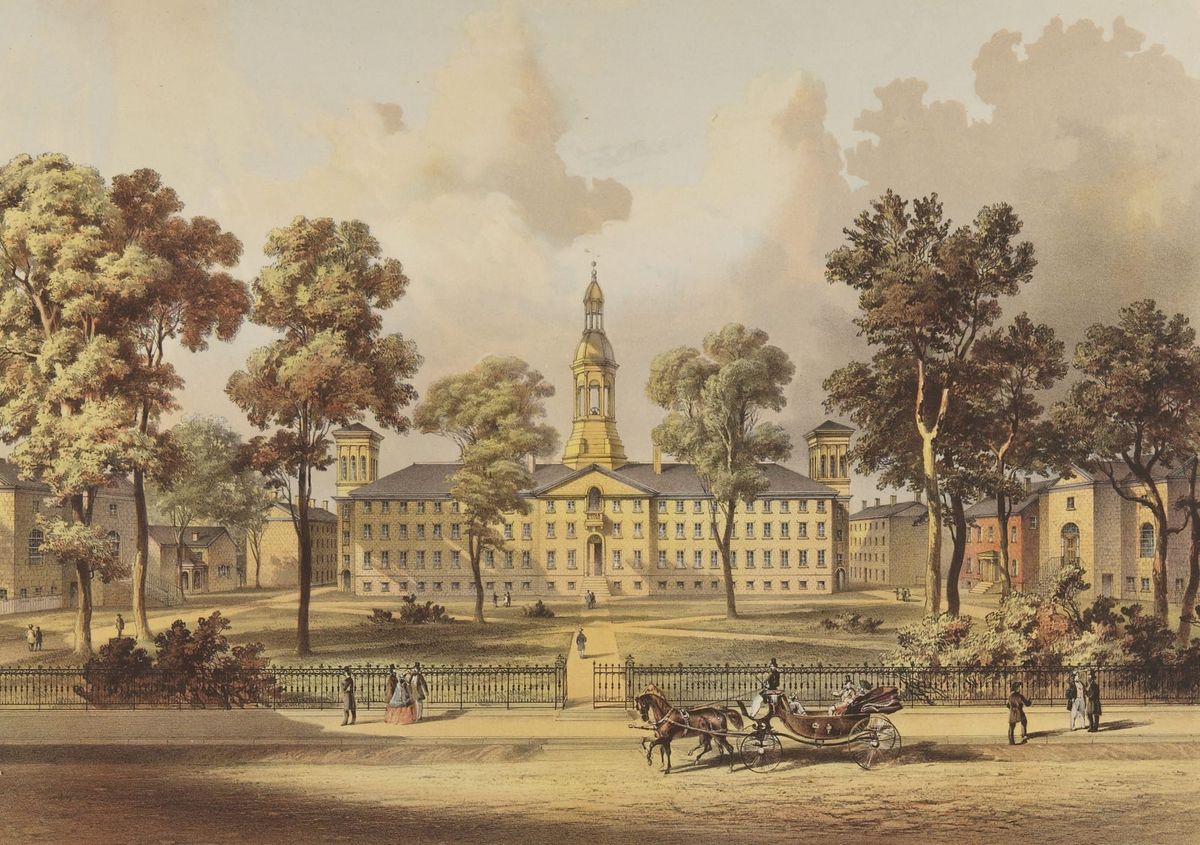
Princeton University, which was then called the College of New Jersey, played a particularly influential part in America's founding document. Its president, John Witherspoon, signed the Declaration of Independence in 1776. Nine of the fifty-five delegates to the Philadelphia Convention of 1787 that drafted the Constitution attended Princeton, more than any other university. And one Princeton alumnus, James Madison, was popularly acclaimed as the "Father of the Constitution" for his leading role at that convention. Madison was so enamored with college life that he stayed on for six months after graduation to study under Witherspoon.
What was in the air at Princeton in those years that made it such a powerful force in American politics? Well, lots of controversy.
Under Witherspoon's administration, the university had turned itself into a center for the study of radical ideas. Witherspoon declared himself an "opposer of lordly domination and sacerdotal tyranny," and he encouraged students to read widely, including such dangerous thinkers as Plato, Machiavelli, Voltaire and John Locke.
At a time when the colonists were fiercely debating their future relationship with the monarchy, Princeton students were notable for their free-thinking ways. At the university's commencement ceremonies in the 1770s, for example, student speakers delivered lectures on such topics as "The Advantages of Political Liberty," "Independence of Spirit," "The Pernicious Effects of Arbitrary Power," and "The Growth and Decline of Empires." Witherspoon's own son, James Witherspoon, defended (in Latin, no less) the position that it was a law of nature that citizens must resist tyrannical kings.
These thinly veiled attacks on the presiding order shocked some observers. One offended attendee wrote a letter to the Pennsylvania Chronicle denouncing Princeton's indoctrination of its students. "As I would not choose that my son's mind should be imbued at an academy with the peculiar opinions of any religious sect or be entangled in any of the controversies of theology before he was furnished with abilities and rules to enable him to form a proper judgment of them," the writer said, "so neither would I be willing that he should be nurtured in the dogmas of any political party." Understanding the propriety of the British constitution required "an eminence in knowledge which the unfledged wings of youth cannot soar to."
But soar they did. Graduates emerged from their college experience changed, steeped in the lessons of history and eager to put them to use.
James Madison, who graduated in 1771, would draw heavily on these ideas about politics and law as he navigated the perilous years of the American Revolution. Madison developed a love for books and scholarship that he maintained his entire life. When Thomas Jefferson left for Paris, Madison asked him to send him books on history and philosophy. To prepare for the Philadelphia Convention, he retreated to his library and read everything he could on the topic of constitutions. He even prepared a college-like essay, entitled "Ancient and Modern Confederacies," outlining the virtues and vices of various constitutions. Madison's conclusions about an ideal constitution would shape the direction of the convention.
Equally influential were Madison's Federalist Papers, co-written with Columbia University-educated Alexander Hamilton and John Jay. These brilliant essays were published to defend the draft constitution and its model of government. In Federalist No. 57, Madison explained what a constitution was really for:
The aim of every political constitution is, or ought to be, first to obtain for rulers men who possess most wisdom to discern, and most virtue to pursue, the common good of the society; and in the next place, to take the most effectual precautions for keeping them virtuous whilst they continue to hold their public trust.
What a noble testament to the fruits of education.
So the next time you find yourself on the verge of a potentially friendship-ending argument about the Constitution, feel free to stop and engage in that time-honored American tradition of blaming it all on the Ivy League.