On Napoleon the Lawgiver
In 1816, Napoleon Bonaparte, former emperor of the French Empire and conqueror of nations, languished in exile on St. Helena, ruing his defeated ambitions and complaining about his failing eyesight and achy legs. But like many a leader forced into an early retirement, he used his newly found time to reflect on his legacy. It led him to a surprising revelation: "My glory is not to have won forty battles," he told a colleague one night at dinner. "Waterloo will blot out the memory of so many victories. But what nothing will destroy, what will live eternally, is my civil code."
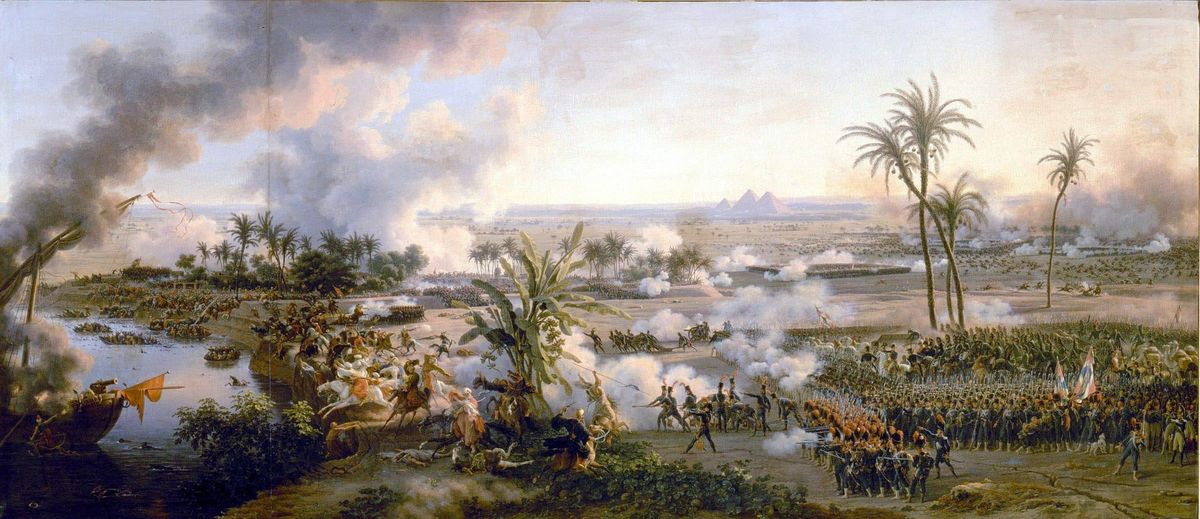
Napoleon has always presented a puzzle for historians. He attracts endless fascination with his remarkable origin story, his stunning rise to power and his equally stunning fall. The Battle of the Pyramids, the love affair with Joséphine de Beauharnais, his doomed invasion of Russia, they are the stuff from which legends are made. But precisely because Napoleon commanded such consuming attention during his life, and the resulting flood of writing about him by contemporaries, it is nearly impossible to figure out who he truly was. Was he a lover of the people, or a despiser of them? Did he believe in democracy, or did he covet empire? Was he a brilliant commander, or a lucky one? One could find evidence supporting all of these positions. My own conclusion is that Napoleon was, like many of us, a bundle of contradictions. He possessed tremendous intelligence, but was capable of stupendous stupidity. He was loving, but also callous.
But in his own mind, Napoleon was a lawgiver.
The Napoleonic Code, the law that Napoleon believed to be his "eternal" gift to the world, was a perfect encapsulation of his dual nature. It was both awe-inspiring and petty, immensely influential and yet not particularly innovative, a law of peace brought by the sword.
When Napoleon overthrew the revolutionary government of France in 1799, he inherited a legal system that was in shambles. Before the French Revolution, kings held absolute power, dispensing rights and privileges to favored nobles. After the French Revolution, these privileges were swept aside in favor of a radical democracy that declared the rights of man and then proceeded to execute the king, queen and anyone else branded an "enemy of the people."
Napoleon, a native Corsican who had been schooled in the French army, believed that the fractious state of French lawmaking was a serious threat to national security. And his experience in war had taught him that the best way to get things done was to find the most talented people, without regard to blood or ideology, and empower them.
So in 1800, he assembled a crack team to draw up a new civil code for France. It included jurists from an astonishingly wide array of backgrounds. There was Jean-Jacques-Régis de Cambacérès, a moderate republican from Montpellier who had made an earlier attempt to revise France's code. There was François Denis Tronchet, nicknamed the "Nestor of the Aristocracy," who had defended Louis XVI at trial. And there was Jean Étienne Marie Portalis, a philosopher-lawyer who spent his free time writing scholarly tomes on Rousseau. Their task was to unify French law.
Napoleon played an active role in the drafting sessions, and his contributions were often eloquent. “The vice of our modern legislation is that it does not speak to the imagination,” he pronounced at one meeting. “You cannot govern men without it; without imagination, man is a brute.”
At other times, Napoleon descended into a parody of a jealous husband, not surprising given his famously unhappy marriage with Joséphine. When Portalis mentioned that he wanted to make divorce illegal, but allow a lesser form of "separation," Napoleon erupted:
The worst possible scenario is when a wife continues leading an immoral life while she still bears her husband’s name, and thereby brings great disgrace upon him. Every day, he hears people talking about his wife, saying, "Madame so-and-so has been doing such-and-such," with each new morning bringing some fresh new outrage. I am willing to accept separation as a legal concept in order to avoid offending sensitive consciences, but it must not be made the only possible remedy for an unhappy marriage.
Napoleon won the skirmish. The code permitted divorce.
In the end, the Napoleonic Code emerged a model of unity. When presenting it to the public, Portalis said that "good civil laws are the greatest good that men can give and receive." The code remains the law in France, and has been copied everywhere from Italy to Argentina, from Japan to Louisiana. Even flawed people can create works of lasting significance.