On The Age of Heroes and the Age of Democracy
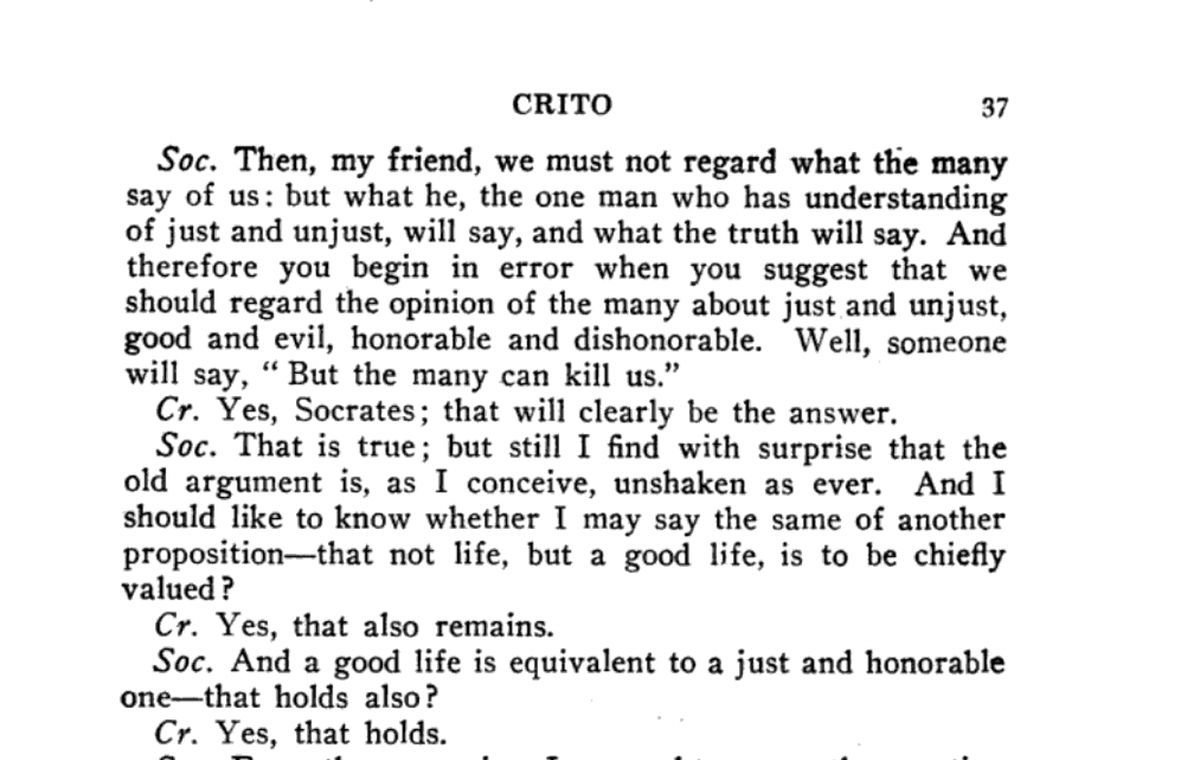
One of the pleasures of studying the history of law is that you get to spend time with brilliant thinkers. And the thinker that started it all was Socrates.
Nearly everyone is familiar with the broad outlines of Socrates' life--his birth in the Golden Age of Ancient Athens after its glorious victory in the Persian Wars, his days in the city's streets and marketplaces asking questions about life, love and virtue, and finally his trial and execution by an Athenian court of law in 399 B.C.
The tragic end of Socrates' story has always presented a puzzle. How could a democratic court sentence history's greatest philosopher to death? It seems like a striking indictment of Athens, democracy and law itself.
Many scholars have spent a career studying the question, but here I'd like to discuss one theory: it had to do with Athens' emergence from the Age of the Heroes and into the Age of Democracy.
Socrates' accusers were three Athenian citizens named Anytus, Meletus and Lycon. Anytus was a statesman. Meletus was a poet. Lycon was an orator. Each had personal grievances against Socrates, but their specific charges against him were that he had violated the city's laws against impiety and corrupting the youth.
We unfortunately do not know all that the accusers said in their speeches at Socrates' trial. But Xenophon records one very strange thing that the accusers apparently latched onto: that Socrates was constantly quoting Homer.
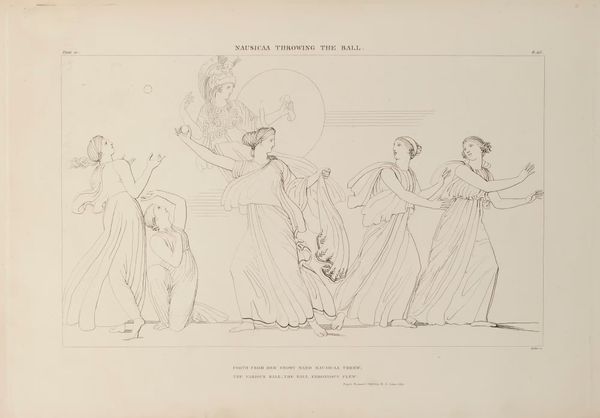
It might seem odd that citing Greece's epic poet could be a bad thing, let alone a criminal offense, in Ancient Athens. The Iliad and The Odyssey are, after all, masterpieces of world literature. But they did describe a very different world, with very different values, than that of Athens in the fifth century B.C. And there was one passage in particular that Socrates liked most of all, one that was "forever on his lips," according to his accusers. The passage comes from a scene in The Iliad where Odysseus is criticizing fleeing Greek troops for their lack of courage. Here is the text:
But when he came across any common man who was making a noise, he struck him with his staff and rebuked him, saying, “Sirrah, hold your peace, and listen to better men than yourself. You are a coward and no soldier; you are nobody either in fight or council; we cannot all be kings; it is not well that there should be many masters; one man must be supreme—one king to whom the son of scheming Saturn has given the sceptre of sovereignty over you all.
The words are tame (even eloquent) stuff compared to what passes for acceptable speech by our leaders today, but even still, you can understand why they would ruffle some feathers. In Athens, citizens prized self-rule, where the common man had just as much of a right to participate in government as any other man. Odysseus' assertion that it is better for there to be "one king" that reigns supreme could have struck observers as a perverse and dangerous thought.
In short, the accusers claimed that Socrates was poisoning the minds of Athenian youths by reminding them of a bygone era.
Socrates answered these charges in his Apology, the greatest defense speech of all time. And he did so by returning, where else, to The Iliad:
A man in whom there is even a little merit ought not to calculate his chance of living or dying; he ought only to consider whether he is acting justly or unjustly, and the part of a good man or an evil man. Whereas, according to your view, the heroes who fell at Troy were not good for much, and the son of Thetis above all, who altogether despised danger in comparison with disgrace; and when his goddess mother said to him, in his eagerness to slay Hector, that if he avenged his companion Patroclus, and slew Hector, he would die himself - "Fate," as she said, "waits upon you next after Hector"; he, hearing this, utterly despised danger and death, and instead of fearing them, feared rather to live in dishonor, and not to avenge his friend. "Let me die next," he replies, "and be avenged of my enemy, rather than abide here by the beaked ships, a scorn and a burden of the earth." Had Achilles any thought of death and danger? For wherever a man's place is, whether the place which he has chosen or that in which he has been placed by a commander, there he ought to remain in the hour of danger; he should not think of death or of anything, but of disgrace. And this, O men of Athens, is a true saying.
Socrates refused to bow to the demands of his accusers. He was driven by a deeper purpose: to be just and to be good. He would walk that path whatever it required of him, wherever it led him, even if it meant going against the crowd. And a democratic court executed him for it.
It was an early warning sign that democracy could descend into a tyranny of the majority.